Scaffolding Parts: What Are the 7 Key Components of a Scaffold?
A scaffold is made up of seven core structural components: base plates and jacks, standards (uprights), ledgers (runners), transoms (bearers), boards (decks), couplers (clamps), and braces. Each plays a distinct role — from distributing load to the ground to forming the working platform where crews operate safely at height.
Continue reading to discover seven basic scaffolding parts.
The components that make up scaffolding vary widely based on the type of building, project requirements, and surrounding conditions of the construction. However, there are some fundamental scaffolding parts that form the basic structure of any scaffold.
| # | Part | Also known as | Primary function | Common material |
|---|---|---|---|---|
| 1 | Base Plates & Jacks | Sole plates | Distribute load to ground | Steel |
| 2 | Standards | Uprights, Verticals, Legs | Transfer full load vertically | Steel / Aluminum |
| 3 | Ledgers | Runners | Support working platform (horizontal, parallel to wall) | Steel / Aluminum |
| 4 | Transoms | Bearers, Putlogs | Support boards (horizontal, perpendicular to wall) | Steel / Aluminum |
| 5 | Boards | Decks, Battens, Planks | Form the working platform | Wood/ Steel / Aluminum |
| 6 | Couplers | Clamps, Fittings, Clips | Connect structural members | Drop-forged steel |
| 7 | Braces | Cross braces, Façade braces | Reinforce rigidity, prevent collapse | Galvanized steel |
What Are Base Plates and Jacks in Scaffolding?
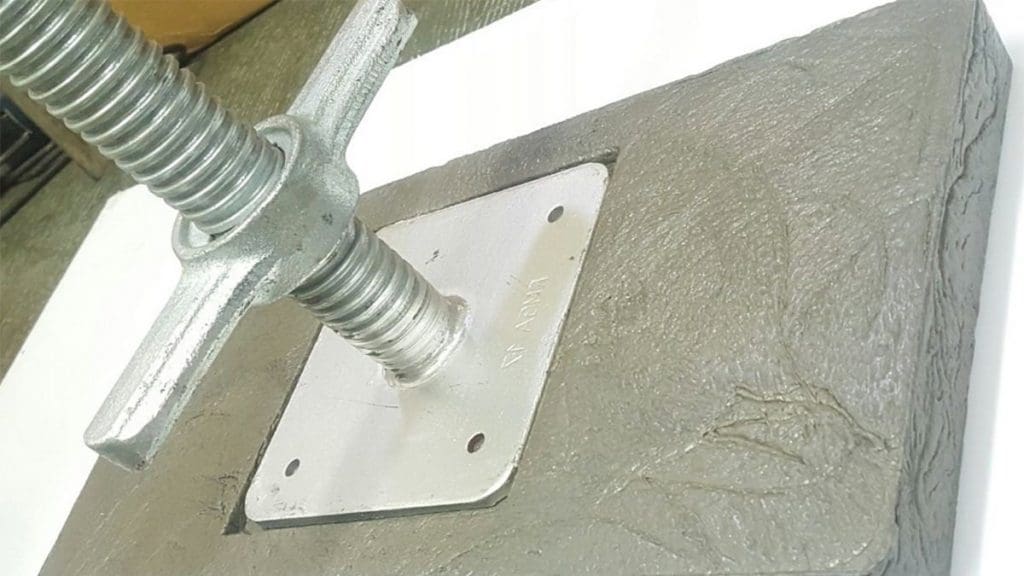
Base plates (also called sole plates) are the load-bearing foundations of a scaffold — flat steel plates that distribute the structure’s weight evenly and support the vertical poles known as standards. Connecting the base plates to standards ensures a strong scaffolding foundation.
Base jacks are usually made out of steel and are adjustable to various lengths. The adjustments are made based on the amount of weight it needs to bear. They can also be made in a variety of configurations, such as swivels that adjust to sloped ground.
For scaffolds that are built off other structures like steel beams, base plates can be replaced with shoring heads (U-heads, for example).
What Are Standards (Uprights, Verticals, Legs) in Scaffolding?
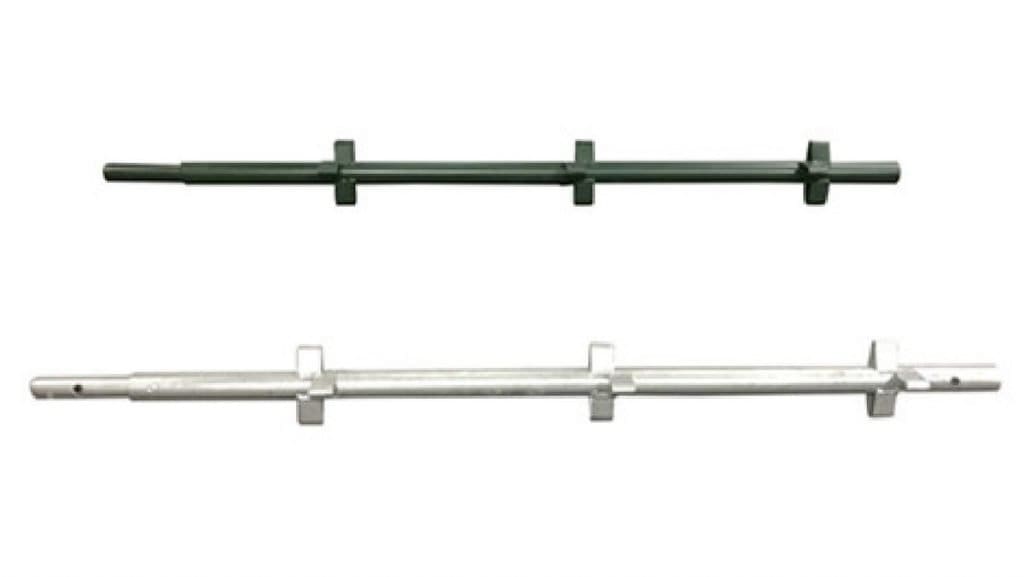
Standards (also known as uprights, verticals, or legs) are the long vertical pipes that form the backbone of any scaffold, connecting the entire structure to the ground and transferring its full load downward.
Standards play a role in transferring the entire load of the scaffold to the ground. As mentioned above, they’re usually connected to base plates to ensure equal distribution of the load.
As standards are of fixed lengths, taller scaffolding requires that the pipes be connected so as to route the load directly through the structure. This is accomplished by using the ‘pin and socket’ joint, which twists to lock successive pipes together.
As standards are of fixed lengths, taller scaffolding requires that the pipes be connected so as to route the load directly through the structure. This is accomplished by using the ‘pin and socket’ joint, or a coupling pin, which twists to lock successive pipes together.
Standards are commonly made out of either painted steel, galvanized steel or aluminum, based on the requirements of the scaffold.

What Are Ledgers (Runners) in Scaffolding?
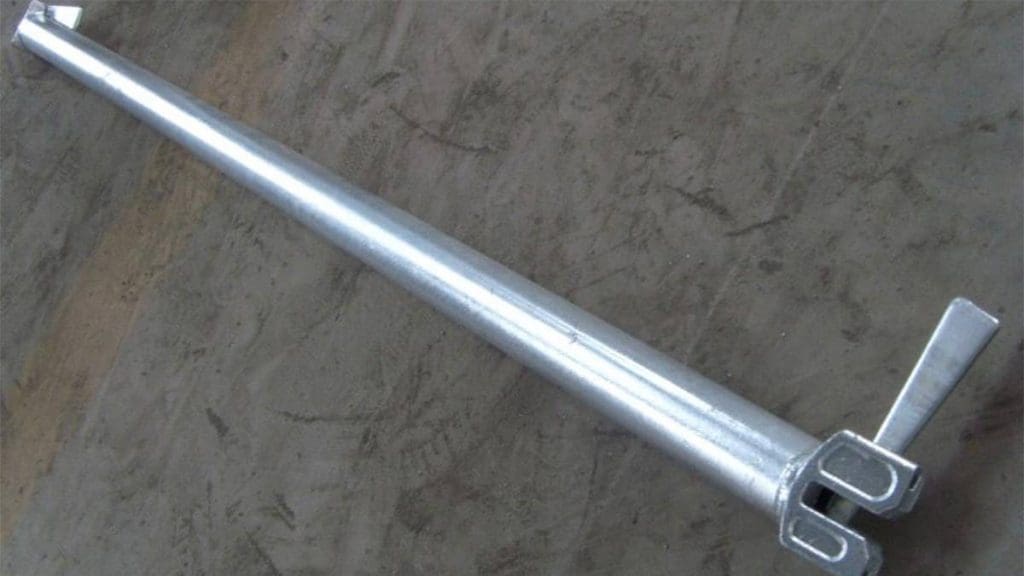
Ledgers (also called runners) are horizontal tubes that run along the length of the scaffold, parallel to the building wall, to support the working platform and determine the height at which boards are staged.
Based on its placement, it determines the height at which the working planks (decks, boards) are staged.
Ledgers are placed in between each standard and structured parallel to the building’s wall. Multiple bays are connected with these ledgers both at the back and the front of the scaffold.
In some scaffolding systems, the same component fulfills both the ledger and transom function, in which case both may be referred to as ledgers.
The material used to create ledgers are either steel or aluminum.
What Are Transoms (Bearers / Putlogs) in Scaffolding?
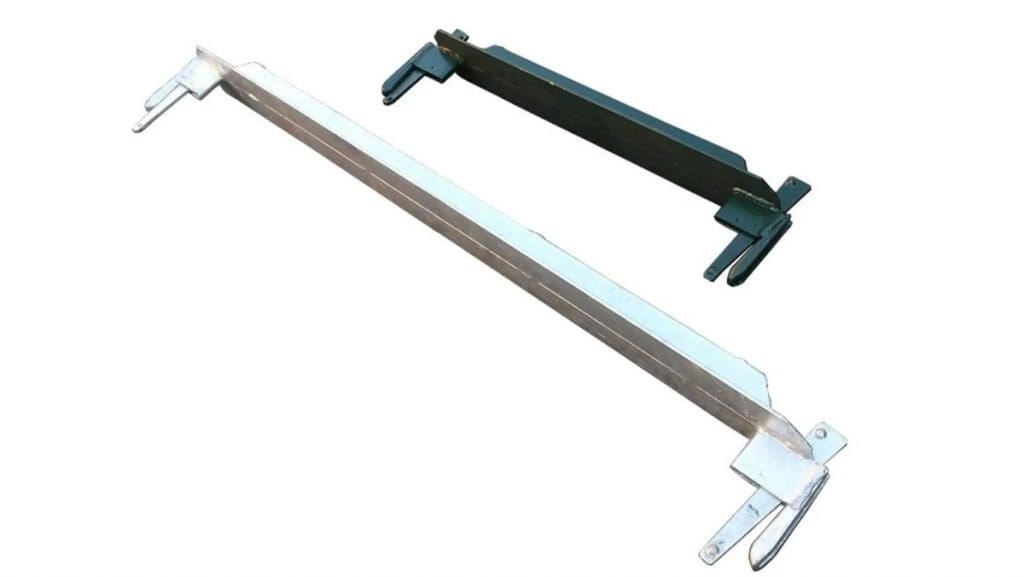
Transoms (also called bearers or putlogs) are horizontal scaffold members that run perpendicular to ledgers, providing direct support for the scaffold boards that workers stand on.
Transoms, or bearers, are horizontal members that meet the ledgers at right angles.
The role of a transom depends on the type. Main transoms provide support for the standards and the working platform by holding them in position. Meanwhile, intermediate transoms provide additional board support when placed at intervals between the main transoms. Another variant is putlogs, a type of transom with a flat end at one side, which is attached directly into the building wall to support working platforms.
The main transoms are positioned right next to the standards, while the intermediate transoms are attached to the ledgers in between the main transoms. Both of these components are made out of either steel, or aluminum.
What Are Scaffold Boards (Decks / Planks)?
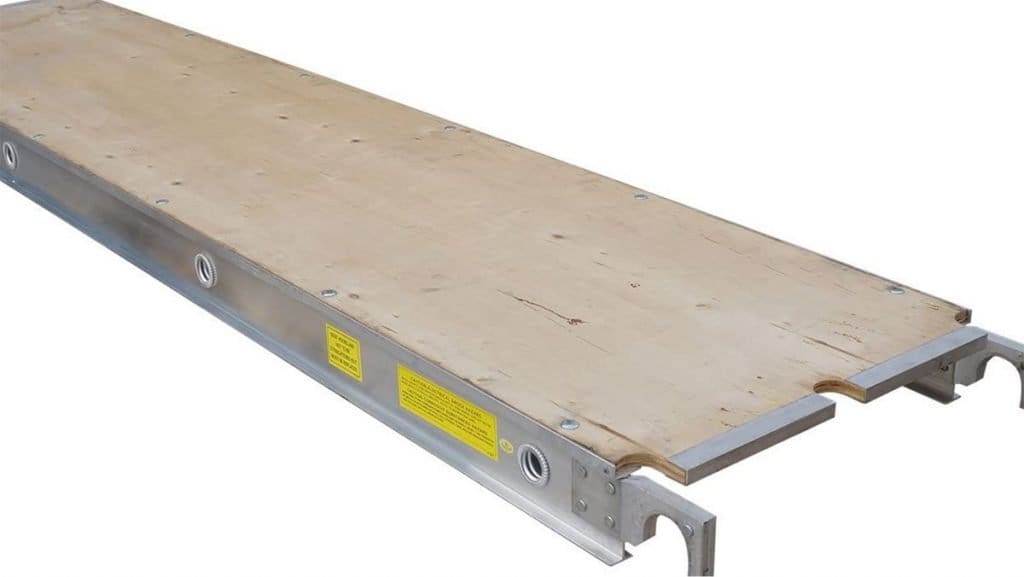
Scaffold boards (also known as decks, battens, or planks) are the flat planks that form the working platform — the surface where workers stand, move, and place tools while working at height.
They’re used as support for workers to stand on and place their tools when working on the scaffolding. Besides providing standing support, boards also ensure workers’ safety when working at tall heights.
Boards are available in wood, aluminum, aluminum frame with plywood board, or hot-dip galvanized steel materials. Accessories such as guardrails and toeboards can be added for security against falls.
What Are Scaffold Couplers (Clamps / Fittings)?
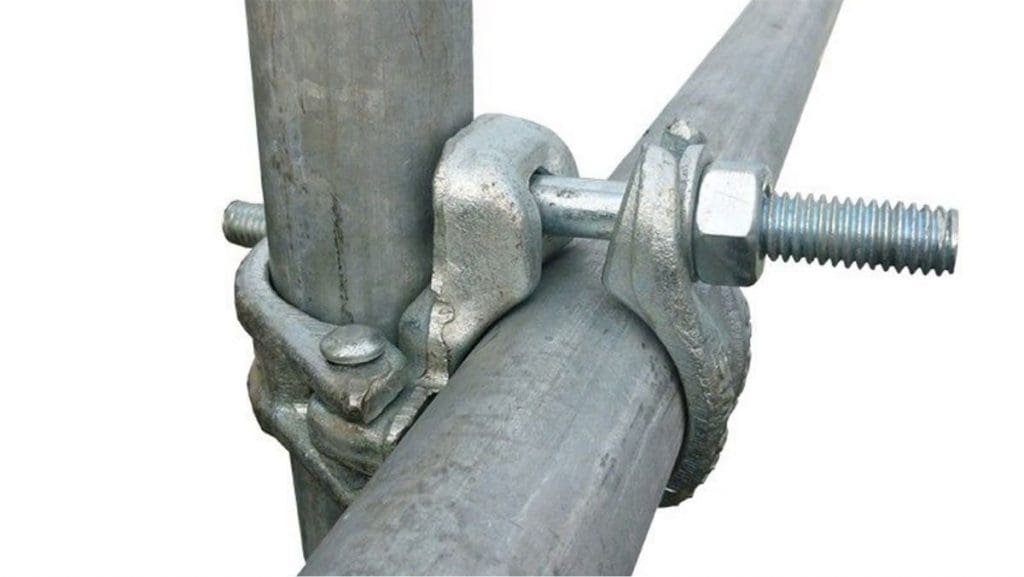
Scaffold couplers (also called clamps, fittings, or clips) are the metal connectors that hold the structural components of a scaffold together — distinct from ties, which anchor the scaffold to an external structure.
Couplers are mainly used to help connect structural elements of a scaffolding. But detailed utilization comes in several variants – Putlog Couplers, Swivel Couplers, and Right Angle Couplers. Putlog Couplers are used to connect a ledger to a transom when the connection is needed to support the working board. Right Angle Couplers are used to connect a ledger or transom to a standard, while Swivel Couplers are recommended for any other angle of connection between scaffold tubes, such as diagonal bracing.
Couplers are usually made out of drop-forged steel or pressed steel for durability and reliability. Some have a hot-dip galvanized finish to avoid corrosion.
Couplers are used extensively in tube and coupler scaffolds, whereas systems scaffolding drastically reduces the need for couplers through the built-in connections between nodes on the verticals and connectors on the ends of horizontal members.
What Are Scaffold Braces and Why Are They Critical?
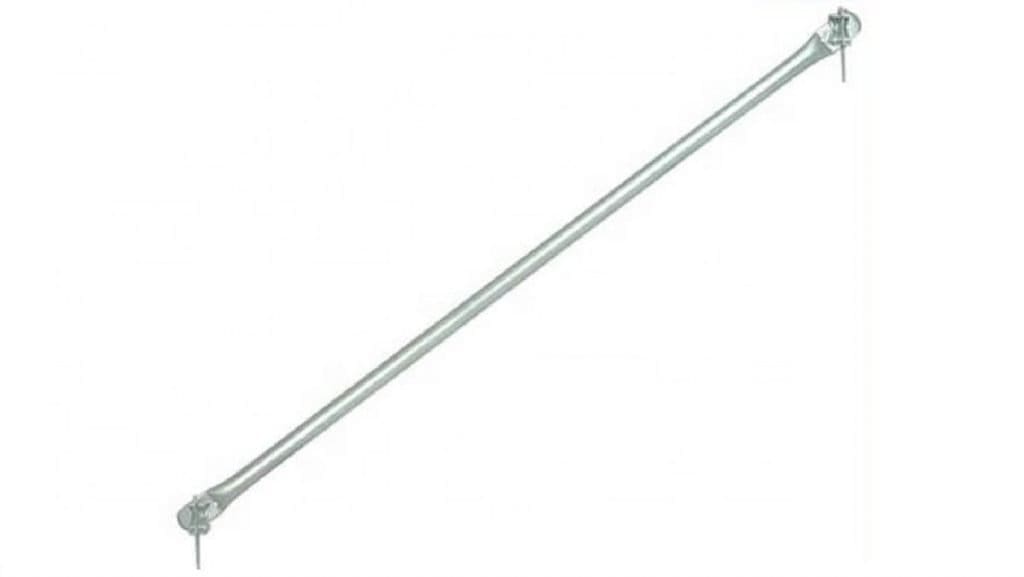
Scaffold braces are diagonal tubes that reinforce the structure’s rigidity — they control the unbraced length of the scaffold leg and prevent the scaffold from swaying, twisting, or collapsing under wind, seismic, or operational loads.
Bracing provides strength by controlling the “unbraced length” of the scaffold leg. Besides that, it increases the scaffold’s stability by ensuring the scaffold leg doesn’t fall over.
There are several types of braces. Cross (transverse) braces run diagonally between ledgers and standards to increase a structure’s overall rigidity. Meanwhile, façade (longitudinal) braces are attached on the face of the scaffold, running diagonally along the length of the structure at every level. They help to prevent a structure from swaying. Braces are critical to keep scaffolds from twisting and ultimately collapsing due to loads as well as seismic, wind, and other external forces.
Braces are made from galvanized steel, an industry standard for heavy-duty support. In bamboo scaffolding, bamboo braces are used.
Frequently asked questions about scaffold parts
The seven fundamental scaffold parts are: base plates and jacks, standards (uprights), ledgers (runners), transoms (bearers), boards (decks), couplers (clamps), and braces. Each plays a specific structural role in safely supporting workers at height.
Ledgers run horizontally along the scaffold’s length, parallel to the building wall. Transoms run horizontally at right angles to ledgers — perpendicular to the wall. Together they form the horizontal framework that supports the working boards.
Scaffold couplers are the connectors that hold structural components together. Right angle couplers join ledgers or transoms to standards at 90°. Swivel couplers handle any other angle, including diagonal bracing. Putlog couplers connect a ledger to a transom where board support is needed.
Standards (also called uprights, verticals, or legs) are the long vertical pipes that form the main vertical elements of a scaffold. They transfer the entire structural load to the ground and are connected to base plates at the bottom to distribute weight evenly.
A putlog is a type of transom with a flat end on one side that is embedded directly into the building wall’s mortar joints or structure. This connects the scaffold to the building itself, providing additional support for the working platform — commonly used in independent and bricklayer’s scaffolds.